AI Data Preparation for Document Collections
Turn source materials into searchable, structured content for your intended application.

Useful inputs begin with readable text, clear references, and an agreed purpose. Scanning, OCR, and indexing make physical materials digitally accessible, with quality checks and file formats defined around the intended application.
Plan Your Document Preparation Workflow

Intake and Scope
Identify material types, volume, permitted uses, and handling restrictions. Confirm transport and access requirements before transferring items or files.

Document Capture
Choose an imaging approach suited to your documents and their condition. Coordinate production batches and priorities through high-volume digitization.

Text and Structure
Assess pages for reading order, headings, tables, and difficult characters. Agree how OCR results will be checked against the originals before processing begins.

Metadata and Indexing
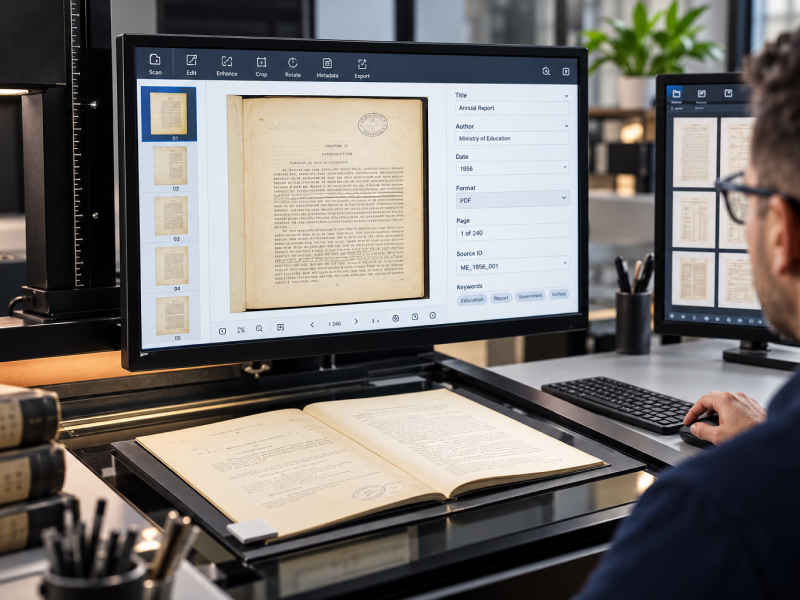
Define fields such as source title, date, document type, and collection identifier. Metadata and indexing connect each file to its context, making related records easier to organize and retrieve.

Quality Review
Set acceptance criteria for completeness, legibility, extracted content, and reference fields. Check representative samples, including difficult pages, and agree how exceptions will be resolved.

Delivery and Testing
Confirm file formats and transfer arrangements. Process a representative batch through the receiving system to identify required changes before work begins on the remaining collection.
Intake and Scope
Identify material types, volume, permitted uses, and handling restrictions. Confirm transport and access requirements before transferring items or files.
Document Capture
Choose an imaging approach suited to your documents and their condition. Coordinate production batches and priorities through high-volume digitization.
Text and Structure
Assess pages for reading order, headings, tables, and difficult characters. Agree how OCR results will be checked against the originals before processing begins.
Metadata and Indexing
Define fields such as source title, date, document type, and collection identifier. Metadata and indexing connect each file to its context, making related records easier to organize and retrieve.
Quality Review
Set acceptance criteria for completeness, legibility, extracted content, and reference fields. Check representative samples, including difficult pages, and agree how exceptions will be resolved.
Delivery and Testing
Confirm file formats and transfer arrangements. Process a representative batch through the receiving system to identify required changes before work begins on the remaining collection.

Make Relevant Passages Easier to Find
A question-answering application needs readable text and references that connect each response to the underlying material. Agreed identifiers and descriptive fields give developers a clearer starting point for organizing the extracted content.
The technical brief should also define how the application will divide content into sections, retrieve relevant information, enforce access permissions, and assess responses.
Your technical team still designs:
- The retrieval system
- Permissions
- Chunking
- Evaluation
Start with the output your development team needs
A scanned image preserves a page’s appearance. OCR makes its text machine-readable, while indexing adds references for organization and search. A searchable PDF may still require additional processing before an application can use it.
Share sample materials, the intended destination and the fields your team needs. Define:
- Document boundaries
- Identifiers and naming rules
- Treatment of tables or multi-column pages
Source Material Is Only the Starting Point
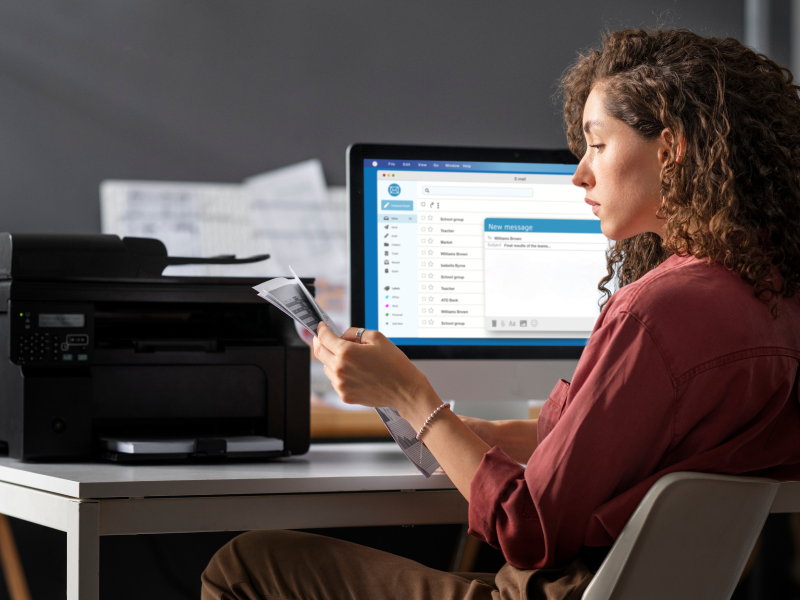
Extracted content may need further selection, cleaning, and labeling before developers can use it for training.
Define the delivery before scaling
A useful project brief states:
- Required image and text outputs
- Metadata fields and source identifiers
- Acceptance criteria and how issues will be reported
- The receiving system and who will approve the test batch
Agree supported formats and any additional transformation work before approving the full batch.
Plan your next collection
Tell us what you have and how you’ll use it.
Questions about AI data preparation
No. It may be useful for reading and search, but your application may need separate text, metadata or a different document structure. Test the agreed output against your ingestion process.
Review representative samples, including difficult pages, against the originals. Agree how errors, missing content and layout issues will be measured and resolved. Results depend on the source material and the approved workflow.
Discuss the sensitivity of the material before sharing it. Confirm applicable access controls, processing locations, transfer arrangements, retention terms and contractual requirements for the specific project.
Digitization makes additional source material available. Any improvement depends on its relevance, quality, the model and the application design; it must be established through testing.