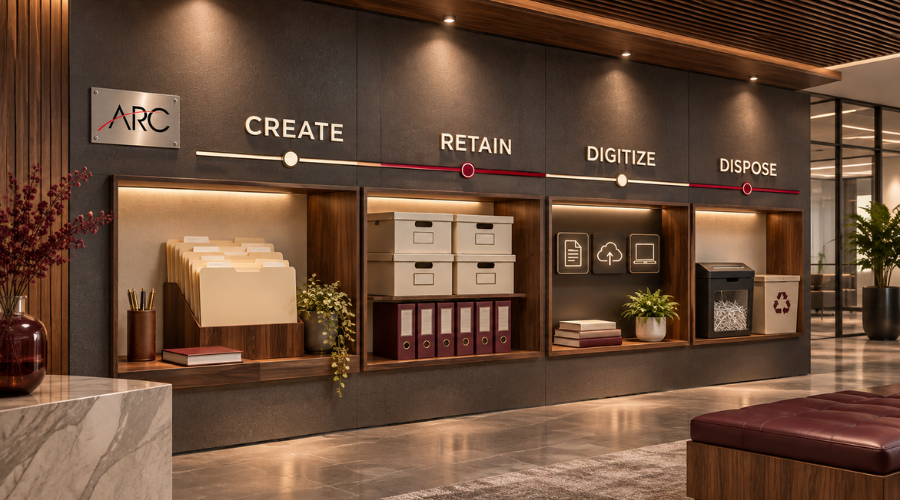
Why Now Is the Ideal Moment for Document Retention Schedule Scanning
Today’s working environment is evolving rapidly, with compliance and easy information access becoming fundamental for organizations across all sectors. As regulations tighten and digital transformation accelerates, the expectations around recordkeeping and data management are changing as well. Studies from ARMA International and AIIM indicate a shift in how organizations manage business-critical documents, with more teams prioritizing secure, cloud-based access and improved business continuity through robust digital practices. Document retention schedule scanning sits at the center of this transformation, providing an actionable way for organizations to consistently fulfill regulatory obligations and speed up core business decisions. At ARC, we see this approach as essential for improving data security, minimizing legal risks, and supporting efficient workflows in a landscape where requirements can change quickly.
The Rising Challenge of Managing Paper Records
Maintaining physical documents presents several challenges, especially as teams become more distributed and compliance standards grow stricter. Paper records are vulnerable to misplacement, damage, and unauthorized exposure, leading to potential data breaches or audit issues. The manual nature of searching through file cabinets increases the risk of delayed responses and incorrect decisions. Recent data shows digitization can lower record management costs and protect against risk, while providing quick access to the right information. Digitized systems, guided by a document retention schedule, also streamline teamwork by eliminating slow, manual processes. For organizations focusing on growth, managing paper documents is a drain on both time and resources – making it increasingly important to adopt structured digital strategies.
The Critical First Step: Creating a Document Retention Schedule
Before embarking on a large-scale scanning project, it is crucial to establish a clear and comprehensive document retention schedule. At ARC, we help clients plan this step carefully, following leading recommendations from organizations like the National Archives and Records Administration (NARA). A thoughtful retention schedule defines which documents must be kept, for how long, and when they can be securely disposed of. This roadmap ensures that our scanning work preserves compliance, prioritizes sensitive information, and streamlines searching and retrieval once files are digitized. We design each scanning initiative around these standards, protecting confidential data, enabling consistent practices, and supporting each client’s specific regulatory needs. Investing the time to create an effective retention schedule sets the stage for a result that meets today’s operational challenges and tomorrow’s legal requirements.
The Benefits of Document Retention Schedule Scanning
Document retention schedule scanning unlocks measurable gains for organizations striving for compliance and efficiency. By digitizing records according to an established retention schedule, teams are able to ensure their information governance practices are reliable, cost-effective, and audit-ready. As regulatory requirements tighten and data breaches increase, controlling access and maintaining precise records is more urgent. According to the AIIM Market Trends Report, nearly 60% of organizations report improved audit readiness and risk reduction just one year after beginning large-scale digitization. With properly indexed digital files, team members reduce the time spent searching for critical documents. This efficiency echoes throughout the organization, enabling managers to make faster, data-driven decisions. Another practical advantage is cutting storage costs. Many businesses discover that eliminating on-site paper management reduces not only square footage needs, but also long-term administrative expenses. Ultimately, retention-aligned scanning provides a foundation for both compliance and streamlined workflows.
How Document Imaging Services Enhance Efficiency and Security
Our document imaging services bring a consistent and secure approach to handling large volumes of records. Utilizing high-resolution scanners and advanced indexing systems, we scan, categorize, and organize documents with precision. During each step of the process, secure chain of custody protocols maintain confidentiality and compliance. For clients governed by laws such as HIPAA, GDPR, or SOX, our team follows best practices recommended by the Information Governance Initiative – ensuring that documents containing protected or sensitive information remain protected from unauthorized access. A secure digital archive benefits organizations post-scanning, with files stored in encrypted, access-controlled systems. This not only minimizes the risk of data loss, but also enables rapid information retrieval when records are needed. Our digitization process adapts seamlessly to bulk or ongoing document imaging needs, allowing businesses to continue operations uninterrupted. With these solutions in place, personnel find it easier to serve clients, respond to audits, and meet evolving information security requirements.
Tailoring Solutions to Your Industry and Record Types
Because every organization faces unique compliance needs and operational challenges, our solutions are designed to align precisely with your industry. Before any scanning begins, we work to understand the specific record types and regulations that govern your field. For healthcare professionals managing protected health information, we implement protocols that support both HIPAA compliance and rapid access for care teams. Legal clients can benefit from indexed case files that streamline court proceedings and records retrieval without compromising client confidentiality. Educational institutions rely on document retention schedule scanning for secure student records, while construction and engineering firms often need technical drawings digitized for access from multiple project sites.
- Healthcare: Protected health information, patient consents, billing records
- Legal: Court filings, case files, contracts, discovery documents
- Education: Student records, transcripts, administrative paperwork
- Construction/Engineering: Blueprints, technical specifications, project documents
For every sector, accurate retention schedule scanning helps reduce redundancy, improve service delivery, and support regulatory documentation standards. We collaborate to create customized workflows that integrate with your existing processes, allowing your team to focus on core operations. Transitioning to digital records, organizations not only preserve institutional memory, but they also build a scalable foundation for future growth and compliance audits.
Seizing the Opportunity: Why Now’s the Perfect Time for Digitization
As workplaces continue to evolve in response to regulatory changes, the shift to remote and hybrid operations, and the ongoing demands of digital transformation, adopting document retention schedule scanning is more than a practical solution – it’s a strategic move. At ARC, we understand that organizations today need predictable access to their records, streamlined compliance processes, and the confidence that sensitive information is managed securely from the point of conversion onward.
Regulatory Momentum and Remote Work Emphasize Immediate Action
Increasingly strict compliance requirements such as updated privacy laws, industry-specific mandates, and global frameworks like GDPR place new pressure on managing information assets efficiently. Whether your organization is in healthcare, education, construction, or legal services, timely and structured scanning can help you keep pace with these obligations, mitigating potential risks from misplaced documents or expired storage timelines. At the same time, the move toward remote or distributed workforces necessitates secure, retrievable documentation across locations and devices. By aligning your scanning projects with a retention schedule, you lay the groundwork for both legal compliance and organizational resilience.
Cost Savings and Productivity: Capitalizing on the Digital Shift
Beyond regulatory responsiveness, the financial benefits of document retention schedule scanning are clear. Physical storage, manual retrieval, and inefficient processes drain resources that could be reallocated to your organization’s core mission. Digitization ensures your teams spend less time hunting for records and more time making informed decisions. By scanning and categorizing documents according to a mapped retention timeline, you also minimize the risk of keeping unnecessary records and create a structured process for regular, defensible file disposal.
Document Retention Schedule Scanning: Setting an Effective Foundation
A thoughtful retention schedule forms the backbone of any successful document scanning program, ensuring that each step – from material preparation to digital archiving – is organized, secure, and auditable. By working with our team, you benefit from tailored solutions that consider your industry requirements and daily workflows. Our attention to indexing, secure handling, and customized output means that you have the information you need, when you need it, and in compliance with your documentation policies.
Begin the Transformation with a Trusted Partner
There’s a unique advantage in acting now. By embracing digitization, you position your organization to meet both current and future demands with confidence. Explore how our document scanning services combine modern technology, secure processes, and years of industry experience to support your compliance and continuity goals. Let’s design a document retention schedule scanning initiative that brings lasting value – protecting your records today and building capacity for tomorrow.
FAQ
What is a document retention schedule, and why is it important before scanning?
A document retention schedule is an organized listing of how long different types of documents must be kept, based on regulatory, legal, or operational requirements. At ARC, we always stress establishing a retention schedule before scanning because it ensures that only relevant, required records are digitized. This step saves resources and guarantees compliance while making your upcoming scanning project far more efficient.
How do we customize document imaging services for different industries?
We tailor our services to meet unique regulations and operational needs for each industry. For example, healthcare requires strict HIPAA compliance, while construction often involves large-format blueprints. By adjusting indexing, security protocols, and retention rules, we guarantee that your scanned documents support your specific compliance and workflow objectives, ultimately streamlining operations.
What are the main security measures you follow during the scanning process?
To prioritize data security, we employ comprehensive measures such as chain-of-custody tracking, secure transport, and restricted-access facilities. In addition, all staff undergo rigorous background checks and continuous training. We encrypt files during transfer and storage to ensure your sensitive business information is always protected throughout every phase of the project.
What immediate benefits can we expect from digitizing documents with a retention schedule?
By digitizing using a documented retention schedule, you’ll see faster information retrieval, reduced physical storage needs, and much smoother audits. You’ll also always have the right files at your fingertips, which means improved compliance, fewer misplaced documents, and significantly lower administrative overhead in your daily operations.
How does a retention schedule scanning project improve compliance?
Retention schedule scanning ensures each document is categorized, stored, and purged in alignment with current regulations and policies. This audit-ready structure minimizes the chance of accidental over-retention or loss of required records, helping your organization avoid hefty fines, manage risk effectively, and pass regulatory reviews with confidence.
What is your process for managing large volumes of diverse records?
Our process begins with an assessment of your inventory and business needs. We then organize files by type and retention category, leveraging batch scanning, advanced indexing, and automated quality checks. This strategic approach not only manages a high volume of records efficiently but also ensures every digital file is easy to locate, access, and manage going forward.
How do you handle fragile, oversized, or uniquely formatted documents?
We utilize specialized scanning equipment and trained professionals to handle all types of documents, whether fragile historical files, large-format blueprints, or non-standard records. As a matter of fact, our custom workflows protect document integrity while transforming them into high-quality, searchable digital files that retain the look and structure of the originals.
Can you help us create a retention schedule if we don’t have one?
Absolutely! We can guide you in developing a compliant, practical retention schedule based on your industry, legal requirements, and business needs. Our experts reference trusted sources such as NARA and ARMA International to build a schedule that serves as the foundation for your digitization strategy and ongoing document management policies.
What is the typical timeline for a document retention schedule scanning project?
The project timeline depends on the volume, condition, and complexity of your records. Generally, small projects may take a few weeks, while larger or multi-location projects can extend over several months. However, our team works closely with you from the outset to set clear expectations and minimize disruption to your operations.
What happens after scanning – how do we access our digital documents?
After scanning is complete, we deliver your digital records securely via your preferred method – cloud storage integration, secure FTP, or our proprietary document management platform. We provide organized, fully searchable files and can assist with setting up workflows for retention, access controls, and routine document purges. Consequently, your organization experiences seamless, secure, and compliant information access from day one.