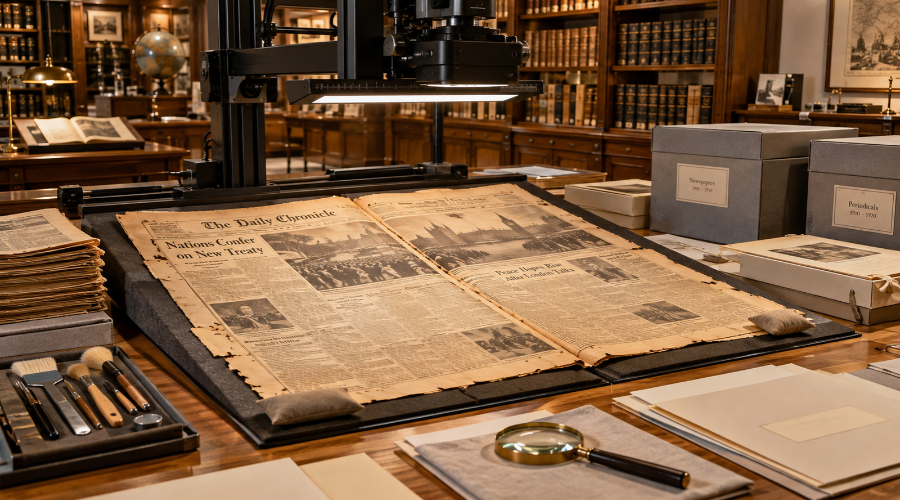
The Power of Preserving History Through Digital Innovation
Old newspapers are irreplaceable records of local communities, pivotal events, and the daily life of previous generations. In a time when research happens more online than on paper, digitizing these newspapers becomes critical. We are witnessing a surge in interest from genealogists, students, historians, and curious community members – each searching for family stories, documentation for academic research, or a better understanding of their roots. With so much history at risk of fading away in physical archives or private collections, digital preservation is no longer just an option; it is a necessity. Our ability to digitize and transform these pages plays a direct role in how communities remember, celebrate, and learn from their past. As more individuals turn to online resources for both personal discovery and professional research, access to digitized newspapers directly supports community memory and keeps history alive for future generations.
Why Historical Newspaper Digitization OCR Matters Today
Archives and libraries have long been the keepers of newspaper collections, but the physical limitations of these resources often keep them out of reach for most people. This is where Optical Character Recognition (OCR) technology makes a significant difference. Historical newspaper digitization OCR allows printed words on scans to be converted into searchable, usable text. When a scanned image is paired with OCR, it is possible to find names, places, and dates at the click of a button – saving countless hours of manual searching through microfilm or fragile paper. This technology has been recognized by respected institutions, including the Library of Congress and the National Endowment for the Humanities, as a major step forward in democratizing access to our collective history. With OCR, not only academic researchers but also teachers, students, and everyday readers can draw new insights from old headlines, editorials, and advertisements – reviving the stories hidden in our newsprint past.
Unlocking New Opportunities With Document Imaging and Graphic Production
Digitization and OCR are just the beginning of what’s possible. Combining professional document imaging with advanced graphic production opens the door to improved preservation and greater impact. Our services focus on capturing the finest details from fragile originals, ensuring both the longevity and authenticity of the files. We understand that libraries, schools, and community groups need not only access, but also clarity, usability, and visual appeal in their digital collections. By offering high-quality imaging alongside thoughtful graphics production, we help transform newspapers into versatile resources. These digitized pages can be used for exhibitions, educational materials, or even creative community projects – expanding the reach and usefulness of local history. Reliable document imaging and improved graphic design ensure that precious historical records remain accessible, engaging, and relevant for current and future audiences.
The Benefits of Historical Newspaper Digitization OCR
Unlocking Searchability and Long-Term Preservation
Our clients often find that the biggest advantage of historical newspaper digitization OCR is the ability to turn static, scanned images into searchable, text-based documents. This not only accelerates research but also makes local and family histories more accessible to anyone who needs them. For researchers searching archives for specific names, places, or events, searchable newspapers are a significant time-saver. Moreover, digitized and OCR-processed content helps protect the original newspapers from further handling and deterioration.
OCR technology, when used with proper imaging, adds new ways to view, analyze, and interact with historical content. Students, teachers, and community members can quickly find relevant articles, advertisements, and announcements. With our careful approach, we help you preserve the integrity of each page, retain vital layout elements, and provide user-friendly access for your audience.
Enhancing Public Engagement and Resource Utilization
By making newspapers searchable and available, we support greater public engagement with your collection. In the past, only a handful of people might have sifted through physical archives. Now, genealogists, historians, and community members worldwide can easily access your digitized collections online. This increased utilization makes it possible for your institution to demonstrate ongoing impact and broaden outreach efforts.
Furthermore, digitization helps unlock the value hidden in rare or little-known publications. OCR technology reveals information that might otherwise have been lost to damage or time, and it allows for deeper connections between disparate sources.
How to Prepare Newspapers for OCR and Search
Essential Steps for Optimal Digitization Results
The path to effective historical newspaper digitization OCR begins with proper preparation. We recommend these steps to maximize both preservation and usability:
- Carefully assess each newspaper’s condition before handling or scanning.
- Clean and flatten pages gently, addressing any folds or minor tears where possible.
- Use high-resolution scanning – aim for at least 300 dpi – to capture as much detail as possible.
- If needed, deacidify fragile pages to prevent further deterioration.
- Take special care with headlines, images, and marginalia, as these add context and value.
Transitioning from physical to digital means every detail counts. By following these best practices, we help safeguard both legibility and authenticity, laying a solid foundation for powerful OCR results.
Maximizing Quality With Expert Document Imaging and Graphics Production
Going Beyond Scanning: The ARC Difference
While basic scanning might make images available, professional document imaging and graphics production add far more value to your archival project. We do not just scan; we optimize. Using up-to-date tools, our team performs layout correction, contrast enhancement, and careful cropping, which not only improves OCR accuracy but also produces visually appealing digital documents.
Metadata tagging, article separation, and headline recognition are standard parts of our process, streamlining your access and making search functions more robust. Our workflow ensures your newly digitized newspapers are easy to navigate and visually consistent – qualities that help readers of every skill level.
To further enhance presentation, our graphics production services allow your organization to highlight important stories and create themed collections. Whether you want digital exhibits, classroom-ready packets, or editable files for ongoing projects, we tailor delivery to fit your needs while protecting historic context. This combined approach increases both the longevity and the usefulness of your historic newspaper collections.
The Lasting Value of Historical Newspaper Digitization OCR
Our commitment to preserving the past isn’t just about saving aging paper – it’s about ensuring that the voices, stories, and discoveries contained in historical newspapers remain accessible and relevant. With historical newspaper digitization OCR, we open doors for researchers, educators, and community members to search, analyze, and cite a wealth of information that would otherwise remain hidden. By transforming static images into searchable, accurate text, we help provide meaningful access to information that supports a wide range of goals, from genealogy to curriculum development.
Why Partner With ARC for Your Digitization Projects?
Choosing the right team matters when it comes to handling valuable archival collections. At ARC, we draw on years of experience and proven processes to support clients in digitizing historical newspapers with quality and care. We know that every project is unique, so we take the time to understand your needs, adapt to your collection, and follow recognized industry standards. From initial consultation through delivery, we maintain clear communication, transparency, and a focus on detail – from handling fragile materials to final proofing of digital outputs.
Document Imaging and Production Services That Go Further
Our approach is more than scanning documents. We invest in advanced imaging technology, layout analysis, and metadata creation to maximize the usability of your digitized newspapers. Our graphic production services ensure your digital files look clean, legible, and visually appealing – ready for digital archives, exhibitions, or public access. For those seeking expert scanning solutions, ARC is prepared to meet projects of all sizes and complexities with reliability.
Meeting Evolving Needs in Preservation and Access
As libraries, schools, and organizations face growing pressure to both safeguard and share their collections, trusted digitization and OCR services can make a lasting impact. We support clients as they adapt to changing expectations around digital access, helping communities and institutions deliver on their missions with lasting, user-friendly digital records.
Ready for the Next Phase in Historical Newspaper Digitization OCR
Whether your goal is to preserve rare newspapers, engage your audience, or build accessible digital archives, ARC stands ready to assist. Our team offers efficient, accurate, and professional support throughout the digitization journey so that your historic resources continue to inspire future generations. Let’s work together to make sure history remains searchable, accessible, and usable for years to come.
FAQ
How customizable are ARC’s newspaper digitization and imaging services?
We offer fully customizable solutions tailored to each collection’s size, condition, and significance. Whether you need bulk digitization, specialized handling for fragile pages, or enhanced graphics production, our team works closely with you to ensure that every detail matches your archive’s goals. Furthermore, we can integrate unique metadata tagging and layout features upon request.
What sustainability benefits do our digitization processes provide?
By digitizing historical newspapers, we help institutions reduce physical storage needs and minimize ongoing conservation expenditures. This approach not only extends the lifespan of original artifacts but also dramatically lowers the carbon footprint associated with shipping, handling, and environmental controls. As a result, our clients can enjoy both environmental advantages and long-term cost savings.
How do we prepare fragile newspapers for digitization and OCR?
We follow best-in-class preservation protocols, starting with gentle cleaning, repair of torn or faded pages, and safe deacidification. Next, we use flatbed scanners with non-invasive lighting and minimum 300 dpi resolution. Because every collection is different, we adapt our methods to preserve the integrity and readability of every newspaper we handle.
Can you handle newspapers in languages other than English or with unusual fonts?
Yes, our advanced OCR technology can process a wide range of languages and historic typefaces. Additionally, we tune the OCR settings according to the document’s age, print style, and linguistic characteristics for the most accurate text recognition. This flexibility means researchers can access even the most unique historical publications.
What is the typical turnaround time for a newspaper digitization project?
The timeline depends on your collection’s size and specific requirements. After an initial assessment, we provide an estimated schedule and keep you updated throughout each stage of the process. Our efficient workflows and dedicated project managers ensure your project is delivered on time and to the highest standards.
How do our imaging and graphics production services enhance the digital newspapers?
Our skilled graphic production team goes beyond scanning, optimizing image clarity, correcting layout issues, and adding vibrant enhancements that preserve the authentic appearance of each page. Additionally, we create custom covers, navigation aids, and branding to elevate the look and usability of your digitized content for a modern audience.
What digital formats do we provide, and can files be integrated with library systems?
We deliver a variety of formats including searchable PDFs, TIFFs, and JPEGs, all compatible with major digital repository and library management systems. If needed, we also support custom metadata and XML outputs, making it easier than ever to incorporate your digitized newspapers into your institution’s digital archives.
Will the digitized newspapers be fully searchable and ready for citation?
Absolutely. With our advanced OCR processing and metadata tagging, each digitized newspaper becomes keyword-searchable. Furthermore, our system captures page numbers, publication dates, and article titles, making citation and referencing straightforward for students, researchers, and the general public.
Do you offer support after delivery of the digitized collections?
Yes, our team provides ongoing support, answering questions and offering guidance on accessing, sharing, or further integrating your digital newspapers. If you wish to upgrade, add new collections, or need technical troubleshooting, we remain available to assist you every step of the way.
How can institutions or community groups get started with ARC’s digitization services?
Getting started is simple. Contact us to schedule a free consultation, during which we assess your collection’s needs and discuss your objectives. From there, we’ll provide a detailed project proposal, transparent pricing, and a clear plan for digitizing and elevating your historical newspapers for generations to come.