Why Secure Chain of Custody Matters in Document Scanning
The way organizations handle confidential documents during digital transformation is more important than ever. As industries of all types continue moving toward digital workflows, protecting sensitive information at every stage has become critical. That protection starts with secure chain of custody in document scanning – we understand this is foundational for our clients.
When paper files, project blueprints, patient records, or legal documents need to be digitized, they often contain information not meant for public disclosure. A secure chain of custody process means we can clearly track who accessed a file, when it was moved, where it was at any point, and verify the scanning process. This transparency reassures our clients and their stakeholders that information is handled responsibly from pickup to final delivery or destruction.
The Risks of Overlooking Document Scanning Chain of Custody
Ignoring strict chain of custody practices in document scanning can create significant problems. One major risk is noncompliance with privacy and data protection laws. Documents that fall into the wrong hands during imaging or transfer can lead to loss of trust, legal penalties, and financial costs from breaches or mishandling. Moreover, clients face reputational damage if it becomes known that sensitive data was compromised during a scanning project.
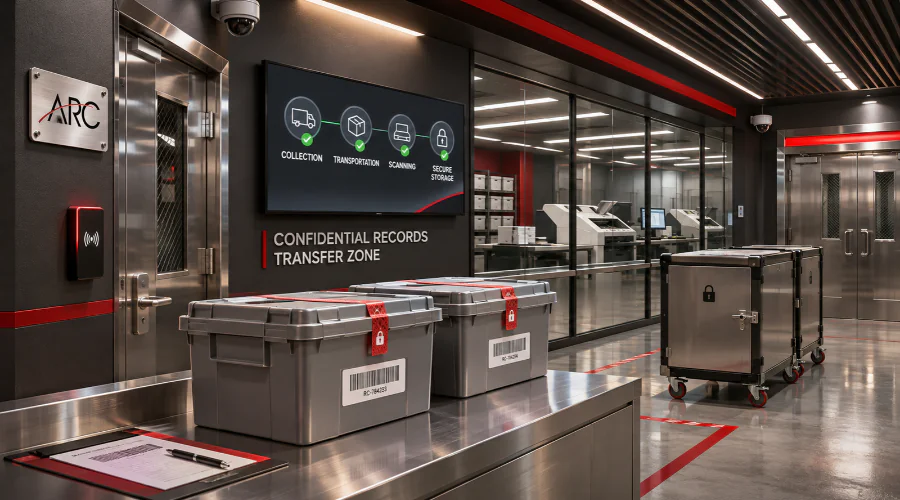
That’s why we never lose sight of the chain of custody. Each step – collection, transport, scanning, and archiving – demands clear accountability. Our clients depend on us to eliminate questions about where documents are at all times, and to provide records in case an audit or incident review is needed.
Meeting Compliance: Legal and Industry Standards
Across sectors such as healthcare, government, education, and legal services, regulatory bodies enforce strict rules around information handling. Laws including HIPAA (Health Insurance Portability and Accountability Act) and FERPA (Family Educational Rights and Privacy Act) require organizations to keep detailed records of how documents are accessed, moved, and converted to digital files.
With document scanning chain of custody processes in place, our team helps clients demonstrate compliance with these industry requirements. Proper documentation is not just best practice; it is often a legal necessity. This extends to internal controls and industry standards such as those set by AIIM (Association for Intelligent Information Management), NARA (National Archives and Records Administration), and ARMA International, which specify accountability and transparency for every piece of information handled during a document imaging project.
As organizations pursue digital transformation, maintaining a secure chain of custody in document scanning is more than checking a box for compliance – it’s about earning and maintaining trust with clients and stakeholders. Our approach ensures that, from the first point of contact to final delivery, each document is protected through auditable, standardized processes.
Key Steps in a Robust Document Scanning Chain of Custody
Critical Steps for Document Security
- Secure Collection: We begin by coordinating a secure pick-up or collection of physical documents, using locked containers and verified transfer logs to prevent any unauthorized access from the outset.
- Controlled Transportation: Every document is transported in secure vehicles, tracked with GPS and equipped with tamper-evident features. Our teams ensure that no document is left unattended during transit.
- Barcoding and Identification: Each box or batch of documents receives a unique barcode. As a result, we can track every movement throughout the scanning workflow, minimizing the chance of misplacement or commingling.
- Tight Access Controls: Only authorized staff have access to document handling and processing areas. We regularly audit permissions, ensuring that each person involved has a defined role and clearance level.
- Standardized Scanning Procedures: Our document scanning chain of custody practices follow recognized standards, such as those outlined by AIIM, NARA, and ARMA International. This ensures consistency, repeatability, and defensibility throughout the project.
- Secure Archiving and Destruction: After scanning, physical files are either returned with logs or securely destroyed, based on client requirements. Destruction certificates are provided as part of the closing documentation.
Advanced Security Measures in Modern Document Imaging
Physical and Digital Controls
Enhancing the document scanning chain of custody means investing in both physical and electronic safeguards. We deploy surveillance cameras in all document processing areas. Entry points are locked and monitored, and a sign-in process keeps accurate logs of who is on-site at all times. For digital security, access to scanners, servers, and production workstations is password-protected and logged. All scanned images move across encrypted channels and are stored in secure digital vaults until delivery.
Meanwhile, digital audit logs keep an immutable record of every scan, view, and transfer. This level of detail not only supports compliance but also provides our clients with complete transparency into the document imaging process. When questions arise, audit trails and chain of custody records help answer them quickly and conclusively.
The Benefits of Professional Graphic Production Under Chain of Custody Controls
When organizations require printed graphics, technical drawings, or large-format plans, security cannot be overlooked. We treat every phase of graphic production with the same rigor as document imaging, applying our chain of custody protocols throughout. This reassures our clients that their sensitive information, such as engineering diagrams or confidential signage, is never at risk of unauthorized access or reproduction.
By aligning professional imaging and graphic production with document scanning chain of custody standards, we offer a comprehensive solution. Our combined approach minimizes the touchpoints, reduces vulnerabilities, and simplifies oversight for organizations seeking to safeguard their critical information assets. Whether handling court exhibits, medical charts, financial records, or architectural plans, we support our clients with reliable and auditable practices at every stage.
Tailored Chain of Custody Solutions for Every Industry
Every industry faces unique regulatory and operational challenges when it comes to managing physical and digital information. At ARC, we understand that government agencies require rigorous documentation of document handling for transparency and accountability. Healthcare organizations must protect patient information to comply with HIPAA and related regulations. Educational institutions manage student records under strict FERPA guidelines, while legal professionals need defensible, trackable processes for evidence and client documents. Our approach to chain of custody is never one-size-fits-all; we customize our process to align with each sector’s privacy, security, and compliance requirements.
Why ARC’s Expertise in Document Scanning Chain of Custody Sets Us Apart
With ARC, clients benefit from established and proven chain of custody procedures that have been refined through thousands of successful projects. Our team is trained to handle sensitive materials at every touchpoint, leveraging documented protocols and technology to ensure you have a defensible audit trail. We use secure barcoding and tracking systems, controlled facility access, and digital audit logs that meet or exceed industry standards. For complex or multi-location projects, our nationwide presence enables us to maintain a consistent, chain-of-custody process across all sites, helping clients meet compliance requirements regardless of their organizational structure or geographic footprint.
Take the Next Step in Secure, Compliant Digital Transformation
Organizations today are under constant pressure to transform processes while remaining compliant and secure. Ensuring that your information is handled with care – from physical pickup through scanning to secure storage or destruction – is essential for minimizing risk and building confidence with stakeholders. ARC offers more than just document imaging; our focus on document scanning chain of custody provides added assurance for every file, drawing, or document we process. If you’re ready to enhance your security, streamline compliance, and pursue digital transformation, our scanning solutions are designed to meet your needs with clarity and accountability from start to finish. Connect with us today to discuss a tailored approach for your next project.
FAQ
What is chain of custody in document scanning, and why is it important?
Chain of custody refers to the documented process of handling sensitive documents from collection through to final disposition, ensuring accountable control at every step. Importantly, our strict chain of custody protocols help prevent data breaches, support compliance with privacy laws, and safeguard organizational trust throughout your digital transformation journey.
How does ARC ensure the secure collection and transportation of documents?
We deploy trained personnel and utilize locked containers or vehicles for document pickup and transit. Additionally, our chain of custody documentation tracks each handoff, so your confidential records remain protected from the moment we collect them until they reach our secure scanning facility.
What security measures are implemented during the scanning process?
Our scanning environments offer layered security, including restricted physical access, 24/7 surveillance, and employee access controls. Furthermore, we use individually barcoded batches and audit trails to link each digital file to its physical predecessor, creating a transparent and traceable workflow.
Can you provide documentation to support audit or regulatory requirements?
Absolutely. We supply comprehensive audit logs, chain of custody receipts, and process documentation for each scanning project. Since many regulations like HIPAA and FERPA require proof of secure document handling, these records serve as vital evidence during compliance reviews or audits.
How do you protect the privacy of highly sensitive documents, such as health or legal files?
We implement a combination of physical and digital security controls. In addition to strict facility access protocols and background-checked staff, we employ encryption, password-protected digital files, and limited access rights. As a result, only authorized personnel handle your most confidential information.
Can your chain of custody solution be tailored for specific industries?
Yes, our protocols are adaptable to diverse sectors, including healthcare, government, education, and legal services. We recognize that each industry has unique compliance and privacy requirements, so we develop customized solutions ensuring seamless protection from start to finish.
Do you offer secure graphic production for items like engineering or architectural plans?
We specialize in professional scanning and graphic production under chain of custody controls, giving organizations confidence that sensitive visual assets – such as blueprints, engineering drawings, and confidential project plans – are safeguarded from unauthorized access or tampering at all times.
What happens to the original documents after scanning?
Depending on client preference and regulatory guidance, we either securely archive, return, or destroy original documents post-scanning. Importantly, secure destruction includes certificates of destruction, ensuring closure and a defensible chain of custody for both physical and digital assets.
How do you control access to digital files after scanning is complete?
Digital files are stored in secured environments with multi-factor authentication, encryption, and role-based permissions. By maintaining detailed access logs, we allow clients to monitor who has viewed or modified files, providing ongoing transparency and security for sensitive information.
How can I get started with a secure document scanning project with ARC?
It’s easy to begin – simply contact us to discuss your project requirements. We will assess your compliance needs, develop a customized chain of custody solution, and provide a detailed project plan. Throughout the engagement, our team will ensure your digital transformation is secure, compliant, and fully auditable.