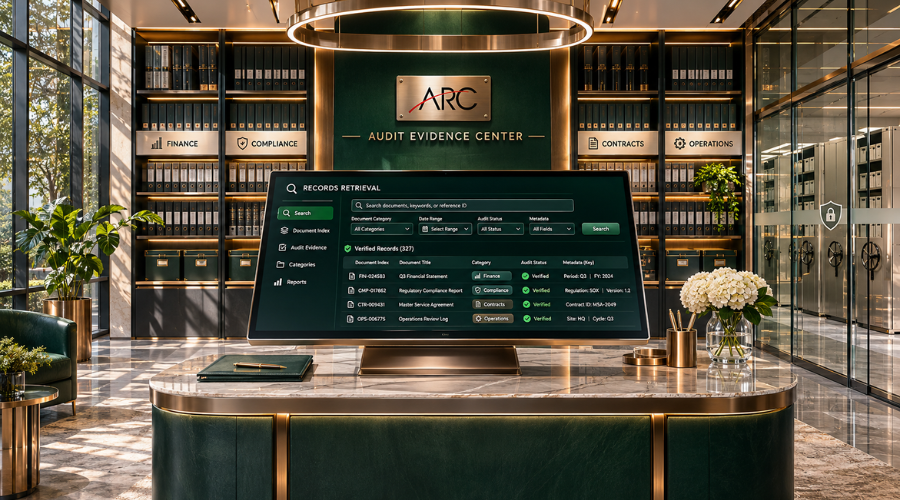
Efficient Audits Start with Accurate Document Imaging
In today’s competitive and fast-changing regulatory landscape, preparing for audits has become more demanding than ever. Organizations are facing tighter deadlines and more extensive requirements from governing bodies. Our clients tell us that gathering, sorting, and sharing documentation for internal and external audits is a significant operational challenge. When the stakes are high, auditors expect documentation to be presented not only quickly, but accurately and in a compliant manner.
Digital transformation offers powerful tools that simplify and improve these processes. Specifically, document imaging – converting paper records into digital files – has become an essential part of audit preparation. The move away from manual, paper-based processes allows our teams and clients to streamline internal workflows, flag errors earlier, and maintain consistent records. When documents are imaged and ready to access electronically, audit teams spend less time searching through boxes of files and more time focusing on higher-value work.
Why Scanned Records Indexing for Audits Matters More Than Ever
As organizations grow, so does the complexity of their business environments. This means increased volumes of diverse documentation and more sophisticated audit schedules. With so many moving parts, maintaining organized digital files is no longer optional. That’s where scanned records indexing for audits plays a critical role. Our indexing process involves assigning searchable tags, keywords, and metadata to each digital document, ensuring you can instantly locate the records needed for any audit request.
A structured indexing approach provides measurable benefits, including faster retrieval times and a clear path to compliance. By transforming disorganized files into well-cataloged digital assets, it becomes possible to respond to auditors accurately and efficiently. This also reduces the risk of compliance gaps or missed documentation during critical stages of the audit cycle.
Unlocking the Power of Graphic Production Services
Document imaging and indexing set the foundation for efficient audit response, but the final presentation of your audit materials also matters. Through our graphic production services, we help package all compliant documentation into clear, visually navigable formats that make information easy to understand and review. By pairing scanning technology and precise data indexing with strong graphic production, our clients are able to present their audit documentation in a more engaging and accessible way.
Integrating these services means you benefit not only from faster internal processes, but also from presentation tools that support discussions with auditors and your organization’s leadership. Our approach combines efficiency with professional output, supporting each client’s need for clarity and compliance throughout the audit journey.
Core Benefits of Scanned Records Indexing for Audits
How Indexing Enhances Audit Efficiency
Modern audits demand quick access to vast amounts of documentation. With scanned records indexing for audits, our team is able to minimize time spent searching for vital records. As a result, responses to auditor inquiries become more prompt and precise. According to AIIM’s “The Paper Free Office,” organizations that implement proper document indexing can reduce search time by up to 50%. This improvement leads not only to shorter audit durations but also more seamless communication between teams.
Another benefit involves compliance. With indexed digital records, we reduce the risk of missing or outdated documents being submitted during audits. Enhanced version control and audit trails support our ability to demonstrate transparency. In addition, ARMA International points out that reliable index structures strengthen our information governance. This means our records stay organized, auditable, and secure.
Moreover, efficiently indexed files support better resource allocation. As manual searching is reduced, our teams can shift their focus toward higher-value tasks, like data analysis or procedural improvements. Notably, strong indexing practices cut down on human error, providing greater data integrity. All of these benefits help us stay prepared when audit deadlines approach.
How to Index Scanned Records for Faster Internal Audits
Implementing Effective Scanned Records Indexing for Audits
Adopting a stepwise approach ensures the highest levels of accuracy and efficiency in our audit preparations. The process begins with high-quality scanning of physical documents. Next comes optical character recognition (OCR) to enable search and selection of content within the digital files. Consistent metadata is then applied: this enables robust categorization, and makes future retrieval straightforward.
We employ clear, standardized taxonomies throughout the indexing process. Using agreed-upon labels and organizational structures keeps everything uniformly organized. NIST’s Publication 800-162 recommends keyword-rich tags, underscoring their value in facilitating quick identification during audits.
Additionally, automation can play a crucial role. Modern document management systems allow us to automate repetitive tasks such as metadata assignment or flagging incomplete records. These tools help us maintain accuracy as our documentation grows.
- Scan original documents using high-resolution equipment
- Apply OCR to unlock searchable text capabilities
- Assign structured metadata relevant to audit requirements
- Use standardized taxonomies for universal consistency
- Automate repetitive indexing tasks through specialized software
We also emphasize ongoing review. Auditing our own digital indexes periodically lets us confirm that no records slip through the cracks. That way, audits are never delayed by missing or misplaced files. The combination of automation, well-defined taxonomy, and continual internal monitoring positions us to deliver records quickly, even under strict time constraints.
Combining Indexing with Graphic Production for Audit Readiness
Turning Data into Professional, Visual Documentation
Once files are indexed and digitally organized, our next step is transforming them into visual reports suited to audits. Graphic production combines indexed data with branded templates, creating a consistent look for all audit documentation. This not only saves time for auditors but also presents information in an approachable and organized manner.
The use of graphical dashboards is another value-add. Summaries, visual overviews, and linked indexes allow auditors and stakeholders to quickly assess the scope of documentation. Our solutions also emphasize security – ensuring only authorized personnel can view or export audit packages. According to recent Deloitte research, visual and interactive audit documentation improves both reviewer comprehension and audit accuracy.
Tying together indexing, automation, and graphic production prepares us for even the most complex audit scenarios. Visual reports reinforce our professionalism, while the underlying digital workflows keep us nimble and compliant. As the business landscape evolves, leaning on these integrated processes gives us the flexibility to meet changing audit needs.
Stay Ahead with Leading Scanned Records Indexing for Audits
In an environment where audit timelines are tightening and compliance expectations are rising, the ability to maintain complete, accurate, and instant access to documentation is not just a convenience – it is a requirement. By integrating robust scanned records indexing for audits with advanced document imaging and graphic production services, we empower our clients to move beyond reactive audit preparations. Instead, you can proactively organize, secure, and present your data in a manner that satisfies auditors and reduces internal resource strain.
Sustaining Audit Readiness Through Digital Transformation
Adopting digital systems for information management transforms the way organizations handle audits. With well-indexed digital repositories, locating specific records becomes an efficient process, even under demanding circumstances. We are committed to establishing these efficiencies for our partners, ensuring that every scanned document is stored with carefully structured metadata and intuitive navigation. Our experience has shown that these preparations do more than satisfy external requirements – they build confidence within your own teams each audit cycle.
Partnering for Growth, Security, and Compliance
Our focus extends beyond converting paper records into digital files. We support our clients throughout the journey, from scanning and OCR processing to secure data hosting and on-demand graphic production. By taking this comprehensive approach, the intersections of compliance, data governance, and operational productivity become clear and manageable. Graphic presentation tools further extend the value of indexed records, transforming audit findings into actionable insights for stakeholders. Our business document scanning solutions serve as the foundation for sustainable audit readiness and broader organizational objectives.
Long-Term Advantages of Scanned Records Indexing for Audits
The investment in scanned records indexing for audits is not just about meeting today’s regulatory or business needs. It establishes an adaptable platform for future growth, merger activities, or compliance updates that may arise unexpectedly. With every audit cycle, our systems foster a continuous improvement culture, ensuring peace of mind for leadership and clarity for audit teams. More than a service provider, we strive to be your partner in creating streamlined, cost-effective audit documentation processes that are ready to scale as your requirements evolve.
FAQ
What customization options are available for scanned records indexing?
We offer extensive customization to fit your specific audit needs. Our team can tailor metadata fields, classification schemes, and access controls according to your internal processes. Whether you prefer project-specific taxonomies or department-level tagging, our solutions adapt easily for maximum retrieval efficiency.
How does document imaging improve audit compliance and data security?
By digitizing paper documents and applying rigorous indexing protocols, we enhance version control and create detailed audit trails. Furthermore, our secure platforms protect sensitive information with robust encryption and access management, helping ensure regulatory compliance throughout your audit cycle.
Can your system automate indexing and reduce manual workload during audits?
Absolutely! We leverage advanced OCR and AI-driven classification software to automate much of the indexing process. Additionally, automated workflows minimize human error and accelerate the preparation of audit-ready documentation, saving your team valuable time and effort.
Is it possible to integrate your scanned records indexing with our current document management system?
Yes, integration is seamless. We support popular document management platforms and can configure export formats that match your existing workflows. This ensures you don’t have to overhaul your current infrastructure while enhancing your audit readiness.
How do graphical production services boost audit presentation quality?
Our graphical production services convert indexed records into visually engaging, branded audit reports. As a result, these professional presentations help your team communicate findings more effectively, impress auditors, and facilitate better decision-making for leadership.
What sustainability benefits are associated with digital document imaging?
Shifting from paper to digital imaging significantly reduces paper waste, storage needs, and energy consumption. Not only does this shrink your organization’s environmental footprint, but it also streamlines operational efficiency in line with modern sustainability initiatives.
How quickly can we retrieve specific documents during an audit using your indexed system?
With our indexed digital records, document retrieval becomes nearly instantaneous. Utilizing keyword searches, category filters, and metadata tags, your team can locate even the most obscure files in seconds, which ensures smoother audit proceedings.
What onboarding or training support do you provide for our team?
We believe successful implementation starts with hands-on training. Our experts guide your staff through system navigation, advanced search techniques, and best practices for document handling. Ongoing support is available to answer questions and optimize your experience.
Are your document imaging and indexing solutions scalable as our audit needs grow?
Our solutions are fully scalable, adapting to both small and large audit volumes. As your organization expands or regulatory demands intensify, our flexible technology and expert support grow alongside you – ensuring long-term value and performance.
How do you ensure data privacy and compliance with industry standards?
We adhere strictly to prevailing industry standards such as HIPAA, GDPR, and SOC 2, where applicable. Along with regular audits of our own processes, our team continuously updates security protocols to keep your data safe and in line with changing regulations.