Attention-Grabbing Visuals: Why Graphics Matter in Science Centers
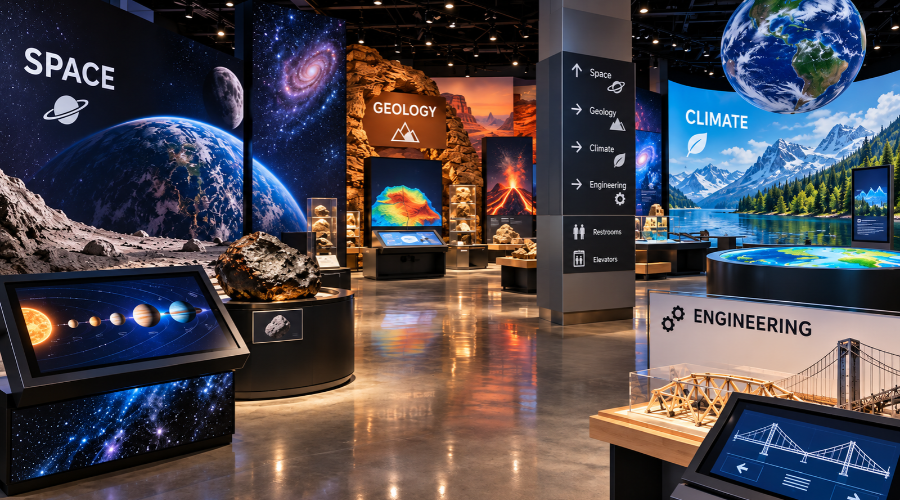
The way we present scientific concepts and discoveries in science centers has a significant impact on how visitors engage with the material. Today, graphics are an integral part of creating memorable and educational environments. Visual storytelling allows us to simplify complex ideas, highlight important details, and spark curiosity in audiences of all ages. Through the strategic use of color, imagery, and design, we can break down barriers to understanding and ensure that science is accessible to everyone.
Graphics are no longer just background decorations; they drive interactions, support exhibits, and help visitors connect with information on a deeper level. Science centers recognize that well-crafted visuals encourage exploration, prompting questions and conversations among school groups, families, and lifelong learners. By focusing on clarity and impact, we ensure that each visitor can navigate exhibits with confidence and gain lasting insights from their experience.
The Evolution of Graphics Science Center Educational Exhibits
Over the years, graphics in science center educational exhibits have evolved dramatically. Where displays once relied on printed posters or hand-drawn illustrations, we now have access to high-resolution imaging, digital enhancements, and interactive panels. According to the Association of Science and Technology Centers (ASTC), today’s best practices include integrating graphics into the flow of an exhibit, using real-time data, and inviting hands-on participation. These advances not only support the storytelling aspect of each exhibit but also adapt to new learning styles and visitor expectations.
Improvements in document imaging and production processes enable us to create graphics that are accurate, durable, and easy to update. Adopting standards from organizations like the Smithsonian means our work meets strict requirements for color fidelity, readability, and accessibility. As our printing and imaging technology progresses, our ability to serve diverse science center environments keeps growing, while our commitment to sustainability ensures that our graphics both look good and are responsibly produced.
Unlocking Knowledge: How Graphics Enhance Learning Outcomes
Research consistently shows that the use of professional graphics in educational settings improves learning outcomes across age groups. Studies referenced by the National Science Teaching Association and the U.S. Department of Education highlight that combining text and visuals increases retention by up to 65 percent, helping visitors remember and understand more information compared to text-only displays. Engaging graphics simplify difficult scientific topics, allowing visitors to immediately grasp concepts that might otherwise be intangible or abstract.
By choosing the right imagery, scaling information strategically, and considering user accessibility, we support a range of learning preferences, including visual, auditory, and kinesthetic learners. Well-designed graphics support self-guided exploration and offer cues that guide visitors through complex exhibitions with minimal confusion. Our approach to document imaging services ensures that every graphic element – whether for permanent display or temporary installations – enhances the educational mission of science centers and delivers real value to our clients and their communities.
The Benefits of Professional Graphics for Science Center Educational Exhibits
Heightened Engagement and Improved Information Flow
When visitors enter a science center, the first thing they often notice is the use of large, vibrant graphics. These graphics guide them through the exhibit, making complex scientific topics approachable and understandable. Clear visual communication keeps the flow of information steady. In addition, well-placed graphics simplify wayfinding, reducing confusion and keeping visitors immersed in discovery.
Durability, Adaptability, and Sustainability
Our production processes are designed with longevity in mind. Graphics are printed using UV-resistant inks and protected with laminates, ensuring they withstand heavy visitor traffic as well as cleaning cycles. This doesn’t just extend the product lifecycle; it protects your investment. Furthermore, as information and learning standards change, modular and updatable graphics allow for quick, cost-effective redesigns. We’re also conscious of sustainable practices by utilizing substrates that are recyclable and choosing low-VOC materials for healthier, eco-friendly environments.
- UV-resistant inks for lasting color
- Recyclable and low-impact substrates for sustainability
- Modular displays enabling easy updates
- ADA-compliant fonts and tactile elements for accessibility
- Wayfinding graphics tailored for your unique facility layout
Modern Solutions: Document Imaging and Graphic Production Tools
To meet the evolving needs of science centers, we rely on advanced document imaging and large-format graphic production. These tools enable us to digitize archives, create highly detailed maps, and translate scientific research into visual panels with unmatched color accuracy. Our high-resolution scanners and printers meet ASTM and Smithsonian Exhibition Standards, ensuring outputs are scientifically precise.
Digitized learning materials let you replicate, modify, or expand exhibits seamlessly. This integration with digital resources supports both physical and virtual science center experiences. Not only do these solutions make exhibit updates smoother, they also simplify the creation of interactive displays and educational handouts that reflect the latest research.
Applications in Action: Graphics Science Center Educational Exhibits Across Diverse Spaces
We apply our expertise in a range of settings, from immersive dome planetariums to outdoor ecological trails. In planetarium environments, we use high-luminance, seamless graphics to recreate star fields and planetary surfaces. For geological exhibits, large tactile maps printed with raised features allow visitors to explore topography by touch as well as sight.
Wayfinding signage enables navigation for all audiences. Clear, concise multilingual graphics help ensure every visitor understands key exhibit messages. Meanwhile, our document imaging services allow us to restore and digitally preserve historic materials, converting archives into engaging wall displays or interactive touchscreens.
For temporary exhibits, we offer pop-up panels and banners that can be installed and removed with minimal disruption. Every solution, whether permanent or rotating, is customized for your facility’s physical layout and educational goals. By staying flexible, we help keep graphics science center educational exhibits relevant and fresh for learners of all ages.
Moving Forward: The Value of Graphics Science Center Educational Exhibits
As we look to the future of science center education, the value of well-designed graphics cannot be overstated. Graphics science center educational exhibits play an essential role in creating accessible and inspiring environments for audiences of all ages. These visual components are not just about aesthetics – they are a conduit for delivering complex scientific concepts with clarity, inviting curiosity and fostering real engagement.
Building Long-Term Engagement with Professional Graphics
Our commitment to delivering effective and impactful graphics supports our partners in creating engaging learning spaces. By integrating advanced document imaging, material durability, and adaptive design strategies, we help ensure that educational exhibits are not only relevant today but also adaptable for tomorrow’s needs. Clear wayfinding, concise messaging, and robust visual storytelling can increase visitor satisfaction and help institutions better meet educational goals. Evidence from organizations such as the National Science Teaching Association and standards recommended by the Smithsonian indicate that investing in professional graphics continues to improve visitor experience, retention, and overall educational efficacy.
Optimizing Processes: From Concept to Installation
By leveraging our document imaging and digital printing capabilities, we streamline the path from initial concept to final installation. Our process allows for rapid prototyping, color-matched reproduction, and fast updates, providing science centers with flexibility and reduced operational downtime. We focus on producing exhibit graphics using sustainable materials and processes that meet industry guidelines, while also maintaining high standards for accessibility and inclusivity. In addition, our team understands the technical requirements of specialty applications such as tactile maps, large-format visuals, or multilingual displays.
Using our digital printing services, science centers are empowered to bring their educational concepts to life as immersive, interactive experiences. Whether adapting archival materials or launching new thematic exhibits, our team is equipped to manage each project with technical rigor and careful attention to detail.
Partnering Together for Future Success
We recognize that each institution has unique educational objectives and audiences. Our collaborative approach allows us to customize our solutions to specific learning goals while also providing guidance informed by national standards and best practices. Whether you are updating existing spaces, developing state-of-the-art traveling exhibits, or planning for new facility expansions, our document imaging and graphics production services can help deliver measurable improvements in both engagement and educational outcomes.
Effective graphics are more than a finishing touch – they are a core element in shaping how visitors interact with scientific content. As your partner, we are committed to supporting your vision for impactful and sustainable graphics science center educational exhibits, helping to drive curiosity, understanding, and a lifelong passion for discovery in every visitor.
FAQ
What customization options do you offer for science center exhibit graphics?
We offer extensive customization options for science center exhibit graphics, including size, shape, color schemes, and special finishes. Whether you need modular displays, tactile panels, or interactive elements, our team works closely with you to tailor visual solutions that perfectly fit your educational goals and exhibit spaces.
How durable are your graphics and exhibit materials?
Our graphics are engineered for long-lasting durability. We use robust laminates, UV-resistant inks, and sturdy substrates to ensure exhibits withstand high-traffic environments and cleaning protocols. As a result, you can expect vibrant visuals that maintain their quality over time and with frequent handling.
Can your graphics be updated or replaced easily?
Yes, our modular approach allows graphics to be easily updated or replaced as needed. Interchangeable panels and digitally managed content make refreshing your exhibits seamless. This flexibility is ideal for rotating displays or updating information to reflect new scientific discoveries.
What sustainable practices are integrated into your production process?
We are committed to sustainability at every stage of production. By utilizing recyclable substrates and low-VOC inks, we reduce our environmental impact. Additionally, we optimize material usage to minimize waste, making our solutions both eco-friendly and cost-effective for your institution.
Do you provide graphic solutions for ADA-accessible and multilingual exhibits?
Absolutely! Our team develops graphics that support ADA accessibility through tactile features, high-contrast visuals, and Braille. We also offer multilingual panels, ensuring a welcoming and informative experience for all visitors, regardless of their language or abilities.
How do you ensure the scientific accuracy of exhibit graphics?
We collaborate directly with science educators and subject matter experts during every project. We verify all content against trusted sources such as NSTA and Smithsonian guidelines. By combining this rigorous approach with state-of-the-art imaging, we produce compelling visuals that are both engaging and accurate.
Can you integrate digital or interactive elements into physical exhibits?
Yes, we specialize in integrating interactive and digital components into physical exhibits. From QR codes and touchscreen overlays to augmented reality features, our solutions increase engagement and offer new ways for visitors to explore scientific concepts.
What technology do you use for document imaging and large-format printing?
We utilize high-resolution scanners and advanced large-format printers to ensure exceptional color fidelity and sharpness. Our technology allows us to digitize archives, rapidly prototype new exhibits, and maintain consistent quality across multiple display types, enhancing both aesthetics and learning outcomes.
How long does it typically take to design and install new graphics?
The project timeline varies depending on complexity, but we prioritize efficiency and open communication. Simple updates may be completed in a matter of days, while large-scale installations or custom projects can take a few weeks. From initial design to final installation, we work diligently to meet your scheduling needs.
Do you provide on-site installation and ongoing support services?
Yes, our services extend beyond just production. We offer professional on-site installation to ensure every graphic is perfectly displayed, as well as ongoing support for maintenance and future updates. This way, your exhibits remain impactful, accessible, and up to date as your science center evolves.