Why Now Is the Time to Digitize with Metadata for AI Search
As digital content grows at an unprecedented rate, the way we manage, find, and leverage information is changing. The shift toward hybrid work models, strict regulatory requirements, and a growing reliance on data-driven decisions make it critical for organizations to think beyond simple digitization. Introducing document metadata indexing for AI search is not just a technical improvement – it’s an essential tool for achieving smarter, faster access to business information.
At ARC, we recognize that traditional methods of file storage and retrieval are being outpaced by the needs of modern enterprises. Instead of relying on basic folder structures and file names, our clients are turning to metadata-driven systems that can unlock information with speed and precision. Enhanced AI search means less time spent hunting for documents and more time putting them to work in meaningful ways. The adoption of document metadata indexing for AI search positions organizations to take full advantage of emerging technologies, adapt to market changes, and address compliance with greater confidence.
The Role of Metadata in Digital Transformation
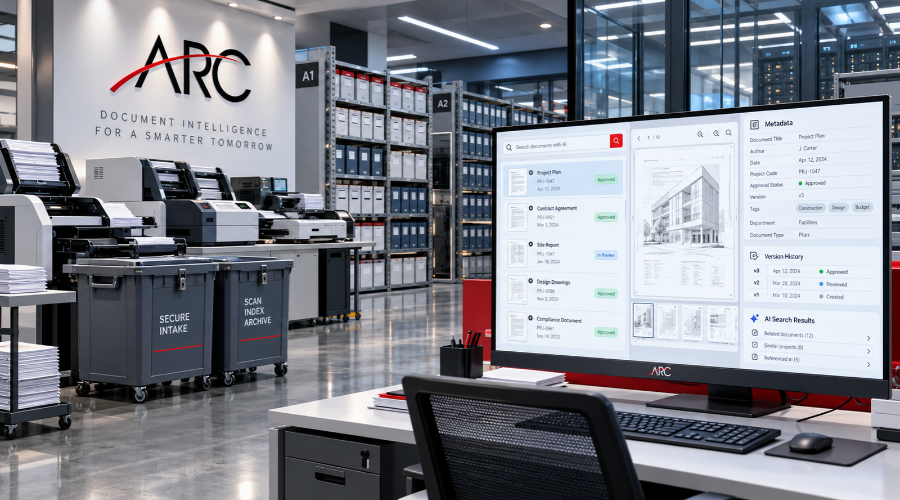
Metadata, in the context of document imaging, refers to descriptive information about a file, such as author, creation date, keywords, project codes, or approval status. These data points transform a static document into a dynamic information asset, ready for rapid discovery and integration into digital processes. When scanning or converting documents, we prioritize metadata enrichment to ensure that files are not only easy to store, but also easy to retrieve, analyze, and manage down the line.
For our clients, using detailed metadata means being able to search for documents using any piece of relevant information, not just the title or file path. AI-driven tools utilize this metadata to deliver results that are far smarter and more context-aware than traditional search methods. This kind of precision supports everything from streamlined onboarding and smarter workflow automation to robust compliance tracking, reducing manual overhead and human error. By embedding metadata at the point of digitization, we help organizations lay the foundation for lasting digital transformation – making their information assets accessible and actionable for both people and technology.
How Efficient Graphic Production Benefits from Intelligent Document Indexing
In the world of graphic production, attention to version control, consistency, and brand standards is non-negotiable. By integrating metadata strategies into our document imaging and graphic production workflows, we ensure every asset is more than just an image – it’s a well-described, easily referenced component of a larger communications ecosystem.
This means rapid access to the most current approved artwork, reliable identification of marketing collateral by campaign or region, and retention of full usage and approval histories. Centralizing graphic production assets using robust document metadata indexing for AI search improves productivity while reducing costly errors that can arise from outdated files or misplaced versions. Our structured approach supports efficient collaboration, easier asset reuse, and a higher degree of control across all platforms where your brand visuals appear. Document imaging and graphic production are no longer separate functions, but coordinated efforts empowered by metadata, ready to meet the demands of modern business communication.
The Key Benefits of Document Metadata Indexing for AI Search
Instant AI-Powered Retrieval
When we digitize documents and assign them metadata, our ability to find and use them changes dramatically. Rather than scrolling through endless folders, we can pinpoint what we need in moments. Document metadata indexing for AI search enables us to perform instant, precise queries based on specifics like project name, document type, client, and modification date. As a result, our team members save considerable time and can respond faster to client requests. Furthermore, this accuracy minimizes costly errors in graphic production workflows.
Advanced Filtering and Contextual Search
Beyond simple keyword matching, AI-powered platforms can interpret the context and intent behind a search. When metadata is thoughtfully indexed, AI understands not just what a document is, but why and how it’s useful. This means we can filter thousands of assets by their usage rights, color profiles, or campaign relevance – so we always pull the right version at the right time. In addition, contextual search helps new team members onboard more quickly since documents are discoverable by process steps or deliverable type.
Streamlined Compliance and Faster Audits
A major benefit in our regulated industries is audit readiness. Digitized files, when tagged with accurate metadata, become instantly searchable for compliance checks. This expedites the audit process, making our workflows more transparent and secure. Our staff can pull up everything needed for an audit – down to specific versions and approvals – in minutes. Meanwhile, version control supported by structured metadata also reduces risk, ensuring we stay on top of our regulatory commitments and internal controls.
- Rapidly locate files based on custom attributes
- Increase productivity across creative and compliance teams
- Support better version control during graphic production
- Automate asset reuse for recurring campaigns
- Meet retention and regulatory requirements with ease
Enhanced Data Governance and Asset Reuse
Data governance becomes simpler when every scanned document is tagged, organized, and tracked. Our assets are not just stored – they are manageable resources. By implementing document metadata indexing for AI search, we enable seamless asset reuse across campaigns. Project managers, designers, and marketers can access approved assets quickly, reducing duplication and speeding delivery. In the fast-paced world of graphic production, these efficiencies directly improve service levels and campaign outcomes for our clients.
Unlocking New Possibilities with Document Metadata Indexing for AI Search
As organizations contend with massive volumes of digital documents and images, we see document metadata indexing for AI search as a key driver of efficiency, compliance, and actionable insights. The integration of comprehensive metadata into every step of the imaging and graphic production process ensures that content remains accessible, discoverable, and ready to support both everyday business functions and larger transformation initiatives.
Transforming Information Access, Enhancing Production
With well-executed document metadata strategies, we help our clients break down information silos and speed up project turnaround. Indexed documents and graphics allow for more precise search results, reducing time spent searching for files and minimizing duplication across teams. Our processes align with the real-world needs of businesses – meeting standards for regulatory audits, industry certifications, and internal best practices while maintaining a unified asset library for both standard documents and creative outputs.
Our Commitment to Intelligent Solutions
By applying document metadata indexing for AI search in our document imaging and graphic production services, we open the door to continuous process improvements. For many of our partners, this means eliminating manual tasks, creating smooth collaboration, and extracting value from previously underutilized archives. As we continue to innovate, each step in the scanning and indexing chain is designed to ensure files are accessible but also protected, supporting a responsible approach to digital transformation.
Next Steps: Moving Toward a Smarter Digital Future
Whether your priority is streamlining compliance, managing branded assets, or preparing your team for the future of remote collaboration, metadata-enriched document workflows provide a scalable foundation. Our scanning solutions are built to integrate seamlessly with your existing operations, ensuring you can start achieving the benefits of a truly intelligent archive right away.
In a landscape where every second counts and information is a core asset, we believe that investing in document metadata indexing for AI search is no longer optional – it’s essential. Let’s build a smarter, more searchable future together.
FAQ
What is metadata indexing, and why is it crucial for effective AI search?
Metadata indexing involves tagging documents with key information – like author, creation date, keywords, or project details – enabling our AI-powered search to instantly pinpoint the files you need. This structured approach eliminates repetitive searches and accelerates knowledge discovery, so your team spends less time searching and more time acting on insights.
How does metadata improve compliance and security for our documents?
By organizing documents with detailed metadata, we can easily track document versions, user access, and sensitive content. This means our compliance audits become faster and more thorough, while our risk of accidental data exposure decreases. Additionally, consistent metadata supports stronger security policies organization-wide.
Can we customize metadata fields to fit our business workflows?
Absolutely! We tailor metadata fields to align with your specific business processes, projects, and asset management needs. Whether you require unique project codes, client names, or workflow stages, our solution adapts to ensure your system grows with your organization.
What is the typical process for digitizing and indexing our existing documents?
Our process starts by securely scanning your paper files with high-quality imaging. Next, we capture and assign metadata either automatically using AI or manually based on your requirements. Finally, all indexed documents are uploaded into your digital archive, ready for instant AI-powered search and retrieval. This step-by-step workflow ensures a seamless transition to a fully digital environment.
How does document metadata indexing support remote or hybrid teams?
With centralized, metadata-rich repositories, our remote and hybrid teams gain secure, on-demand access to documents from anywhere. As a result, collaboration becomes easier and version control stays intact, regardless of work location. This flexibility allows us to continue operations uninterrupted, even as our working patterns evolve.
Will implementing metadata indexing affect our current systems or daily routines?
Our solution is designed for seamless integration with existing document management and workflow tools. While some process adjustments are introduced during onboarding, the increase in search efficiency and organization ultimately leads to smoother daily routines and far less time spent on document management tasks.
How does metadata indexing enhance the value of our graphic production assets?
We ensure every graphic file – like logos, templates, or creative assets – carries embedded metadata for fast discovery, brand consistency, and controlled use. This not only reduces time spent recreating or searching for assets, but also guarantees that only approved, up-to-date materials are used across all campaigns and projects.
What are the benefits for onboarding new team members?
Because our indexed documents are easily searchable with clear context, new hires ramp up more quickly. They can locate policies, procedures, and project assets instantly, minimizing disruptions and accelerating productivity from day one. As a result, training cycles shorten and knowledge transfer improves.
Is it possible to automate metadata tagging, or does it require manual entry?
We offer flexible options: our advanced AI tools can automatically populate metadata by analyzing document content, while also supporting manual entry for custom tags. This hybrid approach maximizes accuracy and efficiency, especially for large-scale archival projects.
How do we get started with implementing metadata indexing for our documents?
Getting started is straightforward – contact our team to schedule an assessment of your current document landscape and objectives. Based on your needs, we’ll develop a tailored implementation plan, from digitization and metadata setup to user training and ongoing support. Transitioning to a smarter, searchable digital archive has never been easier.